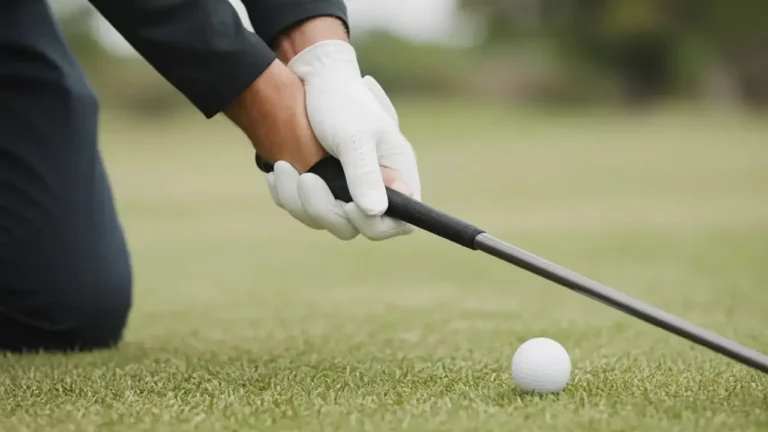
If you hit a frustrating mix of fat and thin iron shots, there’s a good chance your hips are sliding on the backswing. It’s one of the most common habits we see, and one of the easiest to spot on video. The good news is that it responds well to simple feedback drills.
What is hip sway?
Titleist Performance Institute (TPI) defines a sway as any excessive lateral movement of the lower body away from the target during the backswing, forcing your weight to the outside of your trail foot.
TPI compares a good backswing to a baseball batter digging in with the back foot. That stable platform lets them coil around the back leg and then drive towards the target. If the platform shifts, there’s nothing solid to push from.
Why it hurts your strike
When your hips slide away from the target, your upper body and head often go with them. You then have to move everything back on the downswing to find the ball. If your timing is slightly off, the bottom of the swing ends up behind the ball, which is where fat and thin shots come from.
Andy Proudman and Piers Ward explain this clearly in their Me and My Golf video “Stop Your Sway In The Backswing”. They describe how, when they hear a golfer is hitting fat and thin shots, the alarm bells ring for a sway.
Why golfers sway
It isn’t always a technique problem. TPI’s article Eliminate the Sway lists several physical causes:
- Limited trail hip internal rotation. If your trail hip can’t rotate, the body slides instead. TPI notes research suggesting good trail-side internal rotation can dramatically reduce sway.
- Weak glutes. TPI singles out the glute medius as key to stopping the trail hip from shifting sideways.
- Ankle mobility. Limited ankle movement can make it hard to keep pressure on the inside of the trail foot.
- Limited upper and lower body separation. If the torso can’t turn independently, the hips often slide to compensate.
If you suspect a physical limitation, a TPI-certified professional can screen you properly. We’d always recommend that over guessing.
Two drills to turn instead of slide
Drill 1: The trail-hip barrier
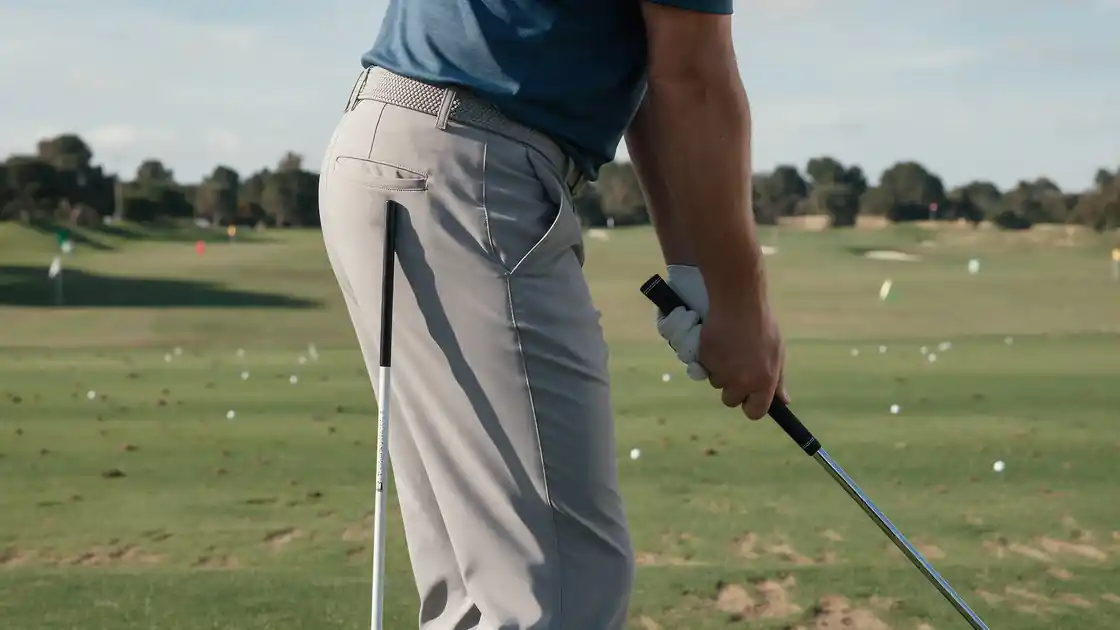
This is the drill Proudman and Ward show in their video. Place an alignment stick or umbrella upright, just outside your trail hip. Make backswings without touching it.
They describe it as great negative feedback: if you sway, you’ll hit it. It forces you to rotate around your trail hip rather than sliding away from it.
How to practise it:
- Set the stick just outside your trail hip at address.
- Make five slow backswings, feeling pressure on the inside of your trail foot.
- Hit ten half shots without touching the stick.
- Build to full swings.
Drill 2: Inside-of-the-foot pressure
Proudman and Ward also describe the feeling of keeping your weight on the inside of the trail leg throughout the backswing. TPI’s point about keeping weight on the inside of the trail foot backs this up.
Try placing a small towel or a golf ball under the outside edge of your trail foot. It encourages pressure to stay on the inside as you turn.
How DE-SHANK helps
DE-SHANK gives you a hip sway score from 30 to 100 on every swing, measuring how much your hips slide instead of turning. It’s ideal for drills like these: hit five balls with the stick in place, then five without it, and compare your scores.
Because DE-SHANK runs on your phone and your swing video never leaves it, you can practise privately in a garden net or at the range. You’ll also see scores for tempo, head movement and posture change, so you can check that fixing your sway hasn’t created a new problem. See more in our features.
For the clearest reading, set your phone up face-on with your whole body in view.
DE-SHANK gives estimates from one camera view. It’s designed for practice feedback, to help you spot habits and track trends.
Common mistakes
- Over-correcting into a reverse pivot. Stopping the slide doesn’t mean leaning towards the target on the backswing. Some weight should still move to your trail side.
- Locking the trail knee rigidly. Keep some flex, but let the hips turn.
- Ignoring the body. If drills don’t help, a physical screen might reveal why.
Our take
Hip sway is common, costly and very fixable. A simple barrier drill and honest feedback will get most golfers turning rather than sliding within a few sessions. For more drills, browse our Coaching Tips.
Try DE-SHANK free
See how much your hips really move. Try the free DE-SHANK beta and get a hip sway score on every swing. It’s free during the beta.